Product Updates
Summer 2026 in the Studio: AI Importers, Video Panels, and the Work Archive

Four months of shipping: import a screenplay or finished pages with AI, video panels, comic balloons with a style cascade, a localization workshop that round-trips, reading-funnel analytics with click heatmaps, Stripe payouts, and portable work archives on schema 1.5.
Between mid-May and mid-September the CMS went from a feature-complete editor to a studio that is live for our first creators. This post walks through what shipped, roughly in the order you meet it when you build a work. Everything below is in the gated beta today.
Start from a script or from finished pages
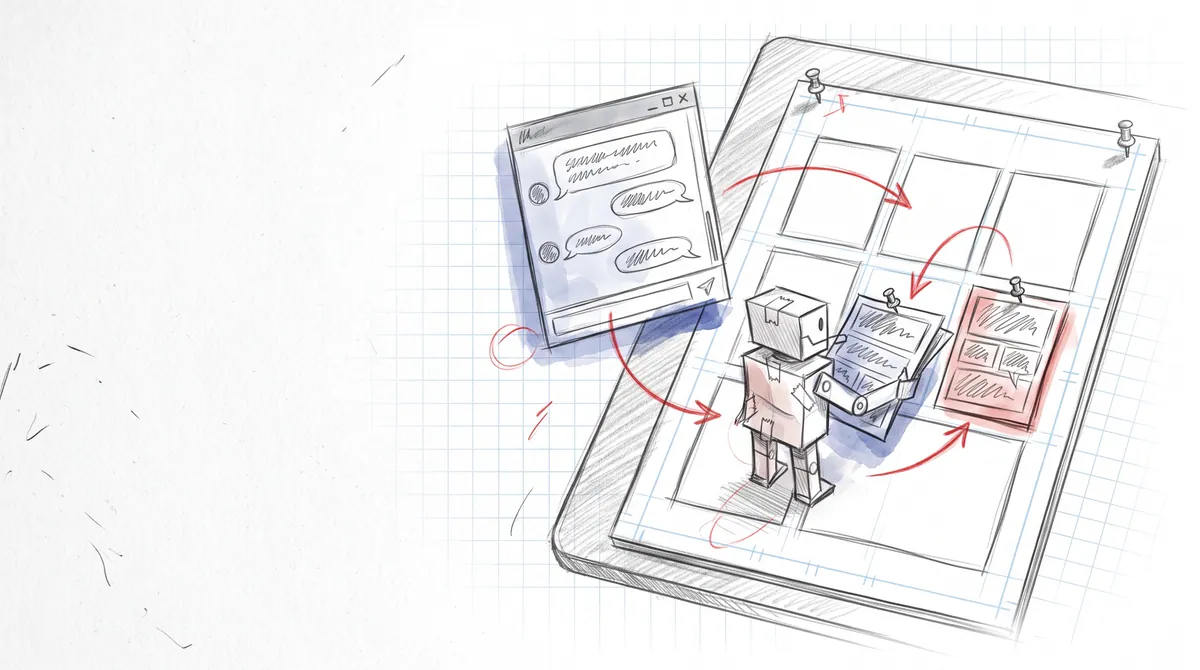
Two new importers take the blank-canvas problem away. The Fountain importer reads a screenplay, lets an AI pass propose chapters, scenes, panels and speech, and gives you a structure tree to correct before a layout pass places balloons on starter pages. The result is a real, editable work, not a preview.
The page-split importer goes the other way: drop finished page images, and a vision model detects the panel rectangles and reading order. You review every cut, fix what it got wrong, and the importer crops each panel as a borderless asset and rebuilds the pages in the format you choose. Optional AI upscaling is billed from a credit balance you can see before you commit.
Both importers are metered by a monthly AI quota, are resumable, and deep-link you straight into the editor when they finish.
Video panels and a balloon engine with a style cascade
Schema 1.1 introduced video layers with play and start modes, loops, ping-pong playback with reverse variants generated by the transcode worker, and poster frames. The editor previews video inline, the timeline playhead drives playback, and the player sequences videos in page view with media-driven auto-advance.
Speech bubbles now render through the same ComicBalloon engine as the player, with nine balloon types including the sharp-cornered narrator caption box. Styling cascades from work defaults to a character override to a per-bubble tweak, and schema 1.3 adds reusable text styles and balloon presets you reference by name. Click to place a balloon and you are typing immediately, with auto-sizing that matches the player pixel for pixel.
The infinite canvas (schema 1.4)
Panels can live on one continuous plane with authored camera moves along the story graph. The Canvas Layout Board lays out webtoon strips or free 2D worlds, shows pacing with gap calipers, and supports reveal modes and parallax decorations. We covered this in its own post in July; it is listed here for completeness.
An editor that forgives
- Unlimited undo and redo across the canvas, structure tree and inspector, with a history panel and command palette.
- Magnetic alignment guides when moving and resizing panels; a HiDPI-aware canvas.
- Multi-select copy and paste of panels, insert-at-position, and moving a bubble to another panel from the context menu.
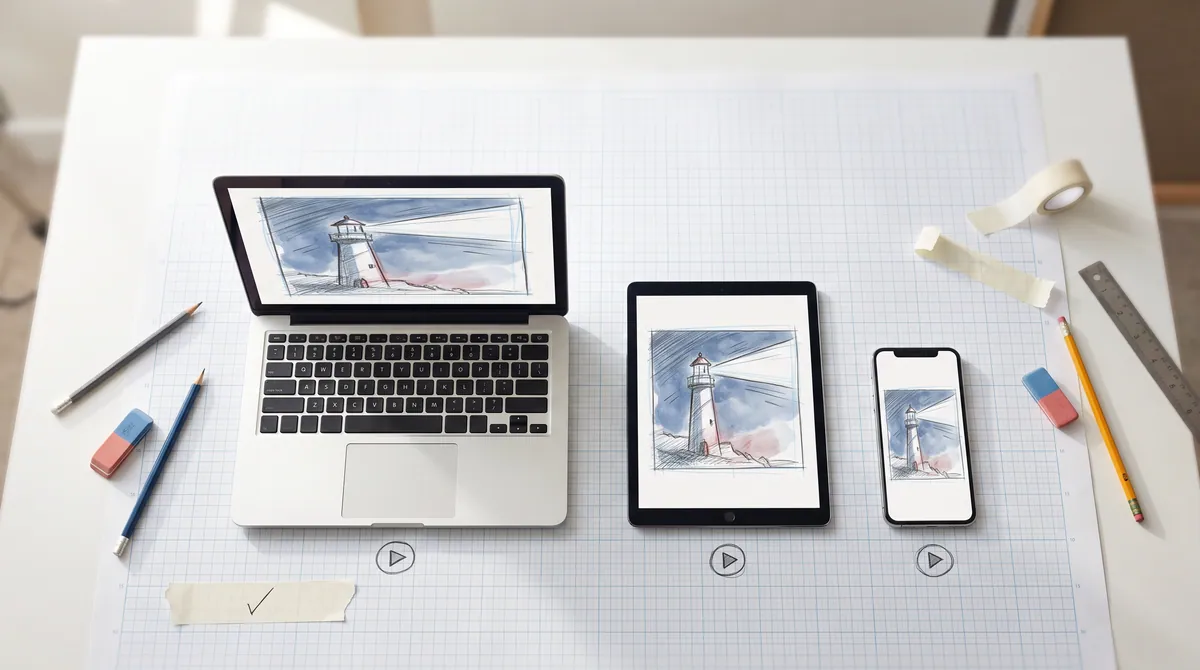
- Supported page formats per work: mobile portrait, tablet, desktop, A4 and US print, 16:9 video. The first image dropped into a panel is auto-fitted in every format.
- Panel variants: alternative panel content chosen by reader variables, with a first-match rule the player enforces.
- Interactive hotspots are stored in schema shape and executed by the player: go to a panel, set variables, open extras, open a modal.
- A keyboard-shortcuts overlay, an accessibility tab in the inspector, and a high-contrast theme.
Assets that organize themselves
Drop files from your desktop onto the library, or straight onto the canvas to create panels and layers in one motion. Assets file into folders, and a reusable asset picker lets characters and extras link library assets instead of re-uploading. Every image gets a responsive WebP ladder from 640 to 2560 pixels, and manifests ship the right size for each screen. When preflight flags an oversized image, one click optimizes it in the background and the publish blocker clears itself.
A localization workshop that round-trips
The workshop extracts every localizable string from the work, lets you translate it, and writes the result back into the content. Machine translation via DeepL fills a locale in one pass with one-click confirmation, and CSV or XLIFF 1.2 exchange lets an external translator or CAT tool do the work. Translation memory, a per-work glossary with term-consistency checks, where-used chips and stale-translation detection keep large works honest. Audio localization is wired to the real TTS pipeline, with waveform preview and non-destructive trimming per bubble.
Analytics you can act on
The dashboard runs on a real aggregation pipeline: trends, a reading funnel, panel engagement, segments by device and locale, previous-period comparison, drill-downs and CSV export. Player sessions, panel views and completions arrive through a hardened public beacon. The newest piece is a hotspot click heatmap per panel, rendered from the raw event stream, so you can see where readers actually tap.
Money, honestly
Stripe Connect is live: connect your own account, and products, coupons and regional multi-currency price points sync to it, with webhooks keeping both sides in step. A visual paywall content map shows what readers see at each rule, and the entitlement simulator opens the player as any reader persona. The player itself now gates reading on real entitlements. On the platform side, plan limits and the one-time Work Pass are enforced and purchasable in-app.
Publishing, previews, and portable archives
Publishing reports real pipeline stages, survives a closed browser tab, and guards force-publishes. Releases carry notes, a side-by-side comparison and a rollback preview with a delta and duration estimate. Preflight offers batch auto-fixes and deep links from each issue to the panel that caused it. A preview publish mints a public link that reviewers open without an account.
Schema 1.5 adds asset folders and a top-level localization block, which is exactly what a whole work needs to travel. The new work archive exports a self-contained zip with the manifest, a sidecar, and every original and variant file. Import it on any PanelWave system or into another team, and every reference is remapped in one transaction. Exports also gained batch jobs, presets and retry-with-options.
Account security and your data
Optional two-factor authentication with recovery codes, a server-side session registry with per-session sign-out, verified email changes, avatar upload, and self-service account deletion with a 30-day grace period. Retention sweeps trim raw analytics events after 24 months and dead sessions after 90 days.
What is next
Video export compositing for video panels, the plugin marketplace, and opening the beta wider. If you want in early, the Founding Creators programme is the door, and the contact page knows the way.